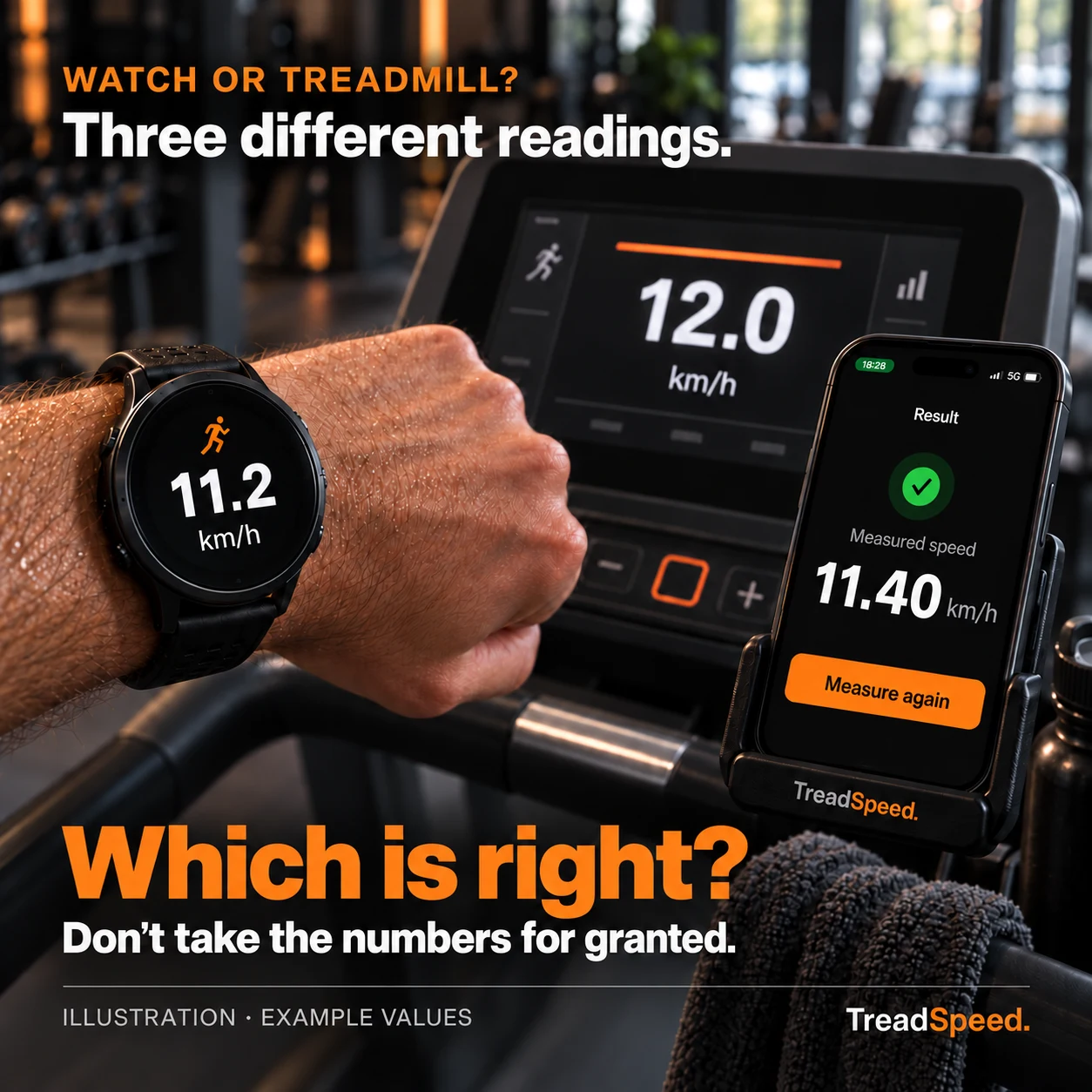
You finish a treadmill run. The machine shows one distance and your watch shows another. Which is right? The mismatch alone does not answer that question: the two devices may use different methods to calculate their readings.
Why do your watch and treadmill disagree?
During indoor running, a running watch may estimate speed and distance from your movements. The method depends on the watch and any connected sensors. Apple, for example, explains that outdoor calibration teaches its watch your stride length at different speeds and can improve readings when GPS is limited or unavailable. Follow the instructions for your own model.
A treadmill normally displays the speed you selected. Actual belt speed can differ from that setting. If distance is calculated from the selected speed, a speed discrepancy also carries through to the distance reading.
Compare the same units first
Watches often show pace in minutes per kilometre, while treadmills show kilometres per hour. These numbers look different even when they describe the same speed. The conversion is simple: pace in min/km = 60 divided by speed in km/h.
| Speed | Pace |
|---|---|
| 10.0 km/h | 6:00 min/km |
| 11.4 km/h | Approx. 5:16 min/km |
| 12.0 km/h | 5:00 min/km |
Also compare the same time period and the same kind of reading: average speed for an entire workout cannot be compared directly with the treadmill’s current speed.
How can you check treadmill speed?
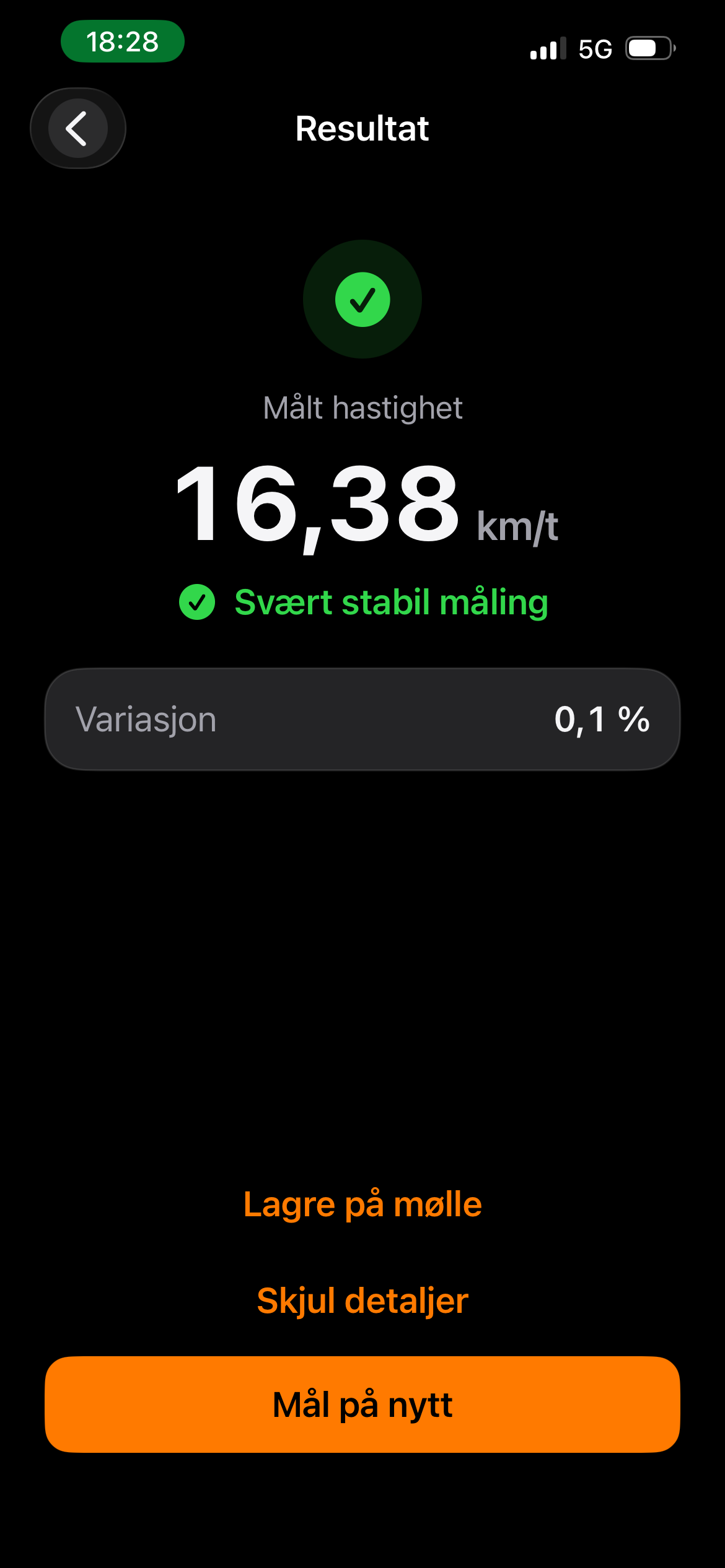
TreadSpeed uses your iPhone camera to detect a marker on the belt. With the circumference of the full belt loop, the app can calculate belt speed and provide another basis for comparison with the treadmill display.
Beta measurements are taken with no runner on the belt. Correct circumference, lighting and camera setup affect the result. An unloaded measurement does not automatically establish the speed throughout a workout with someone running on the belt. The app also does not adjust the treadmill or validate your watch’s calculations.
What does a speed difference mean for distance?
Consider this example: the treadmill is set to 12.0 km/h, but the belt travels at 11.4 km/h. That is 5 percent slower. After 50 minutes, a distance calculation based on 12.0 km/h would show 10 km, while the belt would have travelled 9.5 km. This assumes the difference stays the same throughout; it does not imply that all treadmills have this discrepancy.
Start with matching units, the same time period and the correct setup. That makes it easier to work out what the numbers actually tell you.
Apple Watch source: Apple’s guide to calibrating your Apple Watch. The conversions and distance example are our own calculations.